
Microorganisms are very small life forms that live almost everywhere. Fungi and bacteria are two common types of microorganisms that live in soil, and are usually single-celled organisms or colonies of individual cells. They are only visible with a microscope, but their impact on soil health is huge!
When you think of bacteria and fungi, you may think of the mold and germs that you find on those leftovers you forgot about in the fridge. Gross, right? Yes, but not all microorganisms are bad! The microorganisms in soil are actually very beneficial to the soil, the plants that grow in it, and us!
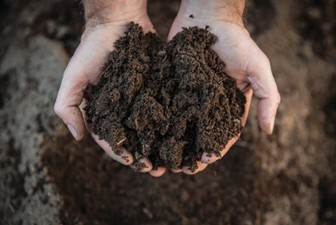
One to five percent of soil is living organisms.
Considering how small each soil organism is, up to 200 billion (that’s 200,000,000,000!) bacteria can be found in one cup of rich top soil. These hundreds of billions of microscopic life forms work together to promote overall soil health. Did you know that microorganisms help plants get water and nutrients by attaching to their root systems? They also decompose organic litter, break down toxins, and suppress disease. When microorganisms are able to do their job, the entire ecosystem benefits, whether it’s a forest, wetland, yard, lawn, or garden.
Microorganisms help everyone
Not only do microorganisms help plants grow, but the physical process of working in the dirt can be healthy for you, too. Recent research in the field of microbiology indicates that exposure to soil microbes, in particular the bacteria Mycobacterium vaccae, improves overall human wellbeing. In trials, the use of M. vaccae reduced the symptoms of cancer, Crohn’s disease, chronic depression, and rheumatoid arthritis when integrated into the patient’s regular health regimen. Additional studies have indicated that skin-to-dirt contact increases brain function and happiness, because of several microorganism’s ability to trigger the release of serotonin. Serotonin is the brain chemical responsible for reducing anxiety, promoting happiness, recharging the immune system, and opening up pathways in the brain for easier learning and memory retention.
How do we get this beneficial relationship going?
It starts with your lawn and garden care. Microorganisms need food, water and oxygen just like we do. A thoughtful lawn and garden care regimen can take advantage of all the benefits microorganisms have to offer!
- Make sure to water deeply, but don’t overwater. When only the surface is dampened, the water evaporates quickly and never reaches the life in the Microorganisms live best when soil is thoroughly damp, but not soggy.
- Aerate your lawn once a year. Aerating pokes hundreds of holes into the thatch of your lawn, so that oxygen can reach the microorganisms. Microorganisms help break down excess thatch. Aeration also helps with water filtration.
- Top dress lawn with a ½” inch layer of compost and mulch garden beds with 3” of This can beneficially alter your soil structure, enhance nutrient content, and give microorganisms food. These factors help plants grow stronger and quicker.
- Avoid tilling, because the weight and force of the machinery destroys the microorganism community and soil structure.
- Maintain a healthy soil pH between 6-6.5. You can get a soil test through Thurston Conservation District to have your soil pH level analyzed, as well as the type and condition of your soil. If your pH is below the recommended level, you can add lime to the soil gradually to bring up the pH.
- When fertilizing, use slow-release organic fertilizer because it does not have the harmful chemicals that can kill microorganisms and affect human Avoid “weed and feed” products.
Source: Stream Team News, Fall 2016