
Blossoms are awakening, and so are lawns and gardens. While we often focus on what grows above ground, it’s what lies beneath that truly matters: the soil, water, worms, micro-organisms, and nutrients. Each of these components plays a vital role in your lawn’s health. Healthy soil encourages strong roots, and healthy roots create vibrant, resilient lawns.
Healthy Soils = Healthy Lawns
Unfortunately, many common lawncare practices can harm soil health. Overwatering, compaction, and chemical overuse can leave soil lifeless and vulnerable to weeds and pests. Compacted soil restricts oxygen and water infiltration, making it harder for grass roots to grow while weeds like dandelions thrive. Pesticides and synthetic fertilizers can kill beneficial organisms that sustain healthy soil. They also contaminate streams, lakes, and the Salish Sea.
The good news? Improving your soil’s health is easy and spring is the perfect time to start!
Six Easy Steps to Healthy Soils and Healthy Lawns
- Grass-Cycle for Free Nutrients
Leave grass clippings on your lawn after mowing to recycle nutrients and retain moisture. Sharpen your mower blade for a clean cut. Remove only one-third of the grass length each time you mow your lawn and mow at two to three inches high.
- Water deeply, but less frequently. Or let lawns go dormant in summer.
To promote deeper rooting, ensure the whole root zone is wetted. Lawns need about 1 inch of water per week in the summer. Water in the morning or evening to reduce evaporation. Be bold and go gold! Let your lawn go dormant in the summer. Water deeply once each rainless month to keep it healthy.
- Aerate, Overseed, and Top-dress with Compost
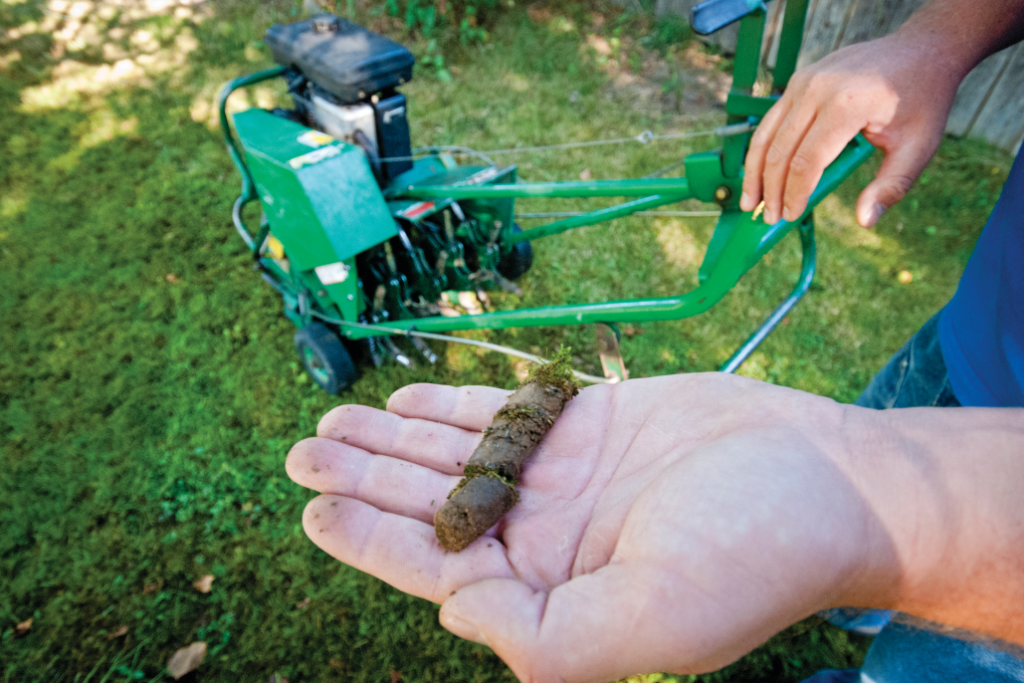
Aerate in the spring or fall to encourage air, water, and nutrients to reach the roots. Aerating removes small plugs of soil, loosens compacted soil, and improves drainage. Overseed with a mix designed for Northwest conditions or consider an eco-lawn with clover to add nitrogen to the soil naturally. Finally, top-dress with ¼- ½ inch of compost to add organic matter and nutrients that build healthy soil for a healthy lawn.
- If Needed, Use a Slow-Release Organic Fertilizer
Test your soil to understand what it needs to thrive. Soil in the PNW tends to be acidic. Spreading lime in the fall every 3-4 years helps balance the soil pH. If needed, apply a slow-release organic fertilizer in September or May. These fertilizers release nutrients gradually through soil biology, minimizing runoff and pollution. Synthetic fertilizers often “force-feed” lawns too quickly, and excess chemicals can wash into streams, lakes, and the Salish Sea, affecting water quality.
- Just Say “NO” to Weed & Feed and Other Pesticides
“Weed and feed” products combine fertilizers and pesticides that can kill beneficial soil life and introduce unnecessary chemicals to your pets and children. Instead, hand-pull or spot-spray weeds. Remember: healthy soil is your best defense against weeds.
- Consider Alternatives to Lawns
In the US, 1/3 of all water consumption goes to lawns, which provide little to no habitat for animals and insects. Grass grows best on well-drained soil in full sun or partial shade. Lacking these conditions in your yard? Replace your lawn with native plants that will thrive on slopes, in heavy shade, and in soggy or rocky soils.
Lawn Aeration Tips:
- Team up with neighbors to share costs and make aerating a community effort.
- Aerate in spring or fall — when soil is moist but not soggy.
- Use a core aerator that pulls 2- to 3-inch plugs.
- Mark sprinkler heads and valve boxes before starting.
- Overlap passes by 25–50% for best coverage.
- After aerating, add lime (if needed), overseed, and fertilize. Test your soil’s pH first — lime helps balance acidity and improve nutrient uptake.
- Choose a certified Pacific Northwest seed mix and apply 6–8 lbs per 1,000 sq. ft.
- Always use slow-release or organic fertilizer — more is not better.
Invest Now for a Healthy Lawn All Year Long
By following these steps, you’ll strengthen your soil, encourage deep root growth, and create a lawn that stays lush and green with less water and fewer chemicals. Healthy lawns naturally resist weeds, conserve moisture, and reduce runoff, saving you time, money, and effort.
A little work this spring will reward you with a thriving, eco-friendly lawn you can enjoy all summer long!
Find more Natural Yard Care Resources at The Garden Hotline.