
Wintertime in the Pacific Northwest is a great time to tend to yard care needs, when plant growth has slowed down for the year. Since Western Washington has wet, mild winter weather, there are ample opportunities to get outside and tend to your green spaces. While growth is slowed down, you can take a step back and plan for the growing season ahead.
Time spent in warmer months, cutting grass, watering, and weeding can be used to tackle other projects that you couldn’t (or wouldn’t) do until winter. This time can offer great perspective of many growing things in your yards, if you know where to look.
Woody Plants: Trees or Shrubs
Since we experience vast seasonal daylight fluctuations, deciduous plants have dropped their leaves and are now just trunk and stem. This can provide a great window into trees’ health, since any injuries, broken branches, or disease may be more obvious without the presence of leaves.
- Keep the leaves! Before you start on any tree project, find ways to recycle your fallen leaves. They can be composted or spread over garden beds as mulch. Small leaves can be left where they lay, to act as a natural mulch for grass over winter. Do not blow leaves into streets—even street sweepers can’t handle large loads of leaves in the fall. When removing leaves from streets, throw away in trash, since they could contain pollutants.
- Assess any trees you are going to prune. Remember that pruning is meant to help, not damage the health of a tree. Every cut you make later cannot be undone. Ensure any work you are planning is feasible with your tools and skill set.
- Prune fruit and other trees and shrubs in late January to February, while they are dormant. First, remove any dead, damaged, or dying parts of a tree. For everything else, follow a less-is-more approach, and take no more than 10% of the overall living mass of the tree during your initial prune. For more detailed advice on pruning, check out this guide from Purdue University: Tree Pruning Essentials.
- Hire an expert when you are uncertain or feel unsafe with the work you think needs to be done to your trees. Fortunately, there are an abundance of great arboriculturists and arborists who do tree work in Thurston County.
- Replant shrubs, trees, and other native plants, as needed. Bareroot plants cost less than potted plants and do well when planted in the winter. The rain provides free water, and the roots have plenty of time to establish before the plants start producing vegetative growth (leaves and flowers) in the spring.
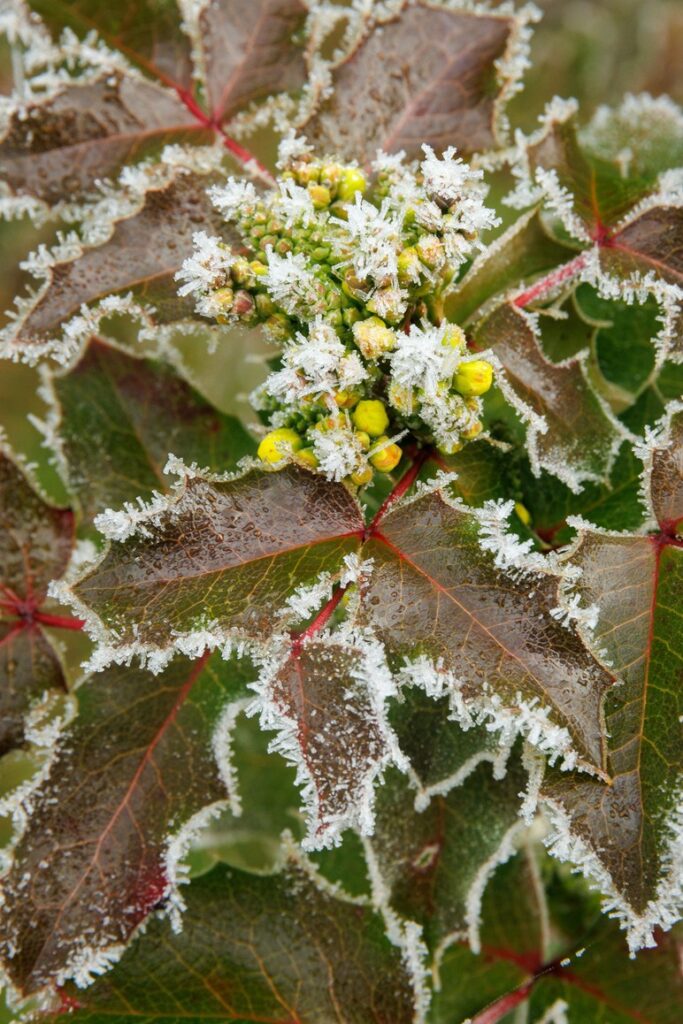
A frost-kissed Mahonia aquifolium, or Oregon grape embodies the resilience of plants year-round.
Herbaceous Plants: Non-woody Plants
Most non-woody plants will die back partially or completely in the winter, and that is normal! Take this opportunity to clean up plant beds around your yard and sketch plans for the coming growing season.
- Weed! regular weeding in the colder months will help prevent annual weeds from going to seed and save you lots of time later.
- Leave seed heads and stems of plants you want. If plants left go to seed, but are not weeds, consider leaving them. The seeds can serve as food for birds and insects and may help next year’s growth in your garden. Dried stems or flowers can be left and will decompose, serving as a base for mulch.
- Mulch! If you didn’t tuck your plant beds in during autumn, mulch over beds now to reduce topsoil erosion and protect plants during cold weather. Mulch grows healthier plants and makes garden maintenance easier. When your plants awake in the spring, your beds will have fewer weeds, healthier soil, and need less water.
Around the House
During the especially wet months of winter, it is best to be prepared for heavy rainfalls. At home, this can look like tackling some simple outdoor home maintenance on a dry day.
- Clean gutter and downspouts. Ensure water can flow freely through your home’s gutters and out the downspouts. Remove debris that may be blocking and repair any leaky or damaged spots.
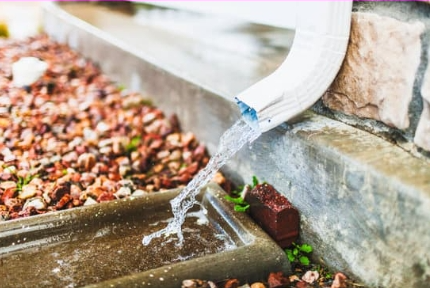
- Check where downspouts discharge. If they end at your house, direct runoff away from your house’s foundation, onto grass or landscaped areas. Make sure flow is not directed towards your neighbor’s property or towards a road.
- Add a splash block, rock, or perforated pipe to slow the flow and spread roof runoff into lawns, landscaped areas, rain gardens, or rock-filled infiltration trenches.
- Consider rain barrels. Capturing rainwater in the wet months is relatively simple, and many jurisdictions in Thurston County offer rain barrel rebates to lower the cost. Store this water for use during dry months, to water gardens or grass.
- Maintain lawn mowers and other yard tools while they’re not needed. Get your blades sharpened, check oil in gas-powered mowers and batteries for electric mowers. Store power tools upright, in dry places. Ensure fluids cannot leak while in storage.
- Dispose of any unwanted pesticides, house cleaning products, and other household hazardous waste materials. HazoHouse at the Thurston County Waste and Recovery Center is located at 2420 Hogum Bay Road NE. You can check their operating hours and get comprehensive information about what they take at the HazoHouse website.
Above all, enjoy the time you spend out in your yard this winter! Listen to the birds that remain overwinter, take solace in this quieter time of year, and reflect on the bounty that nature provides every season.