

Water is a precious and limited resource.
Growing demand and reduced quantity make managing our water challenging for current and future generations.
Water on your property
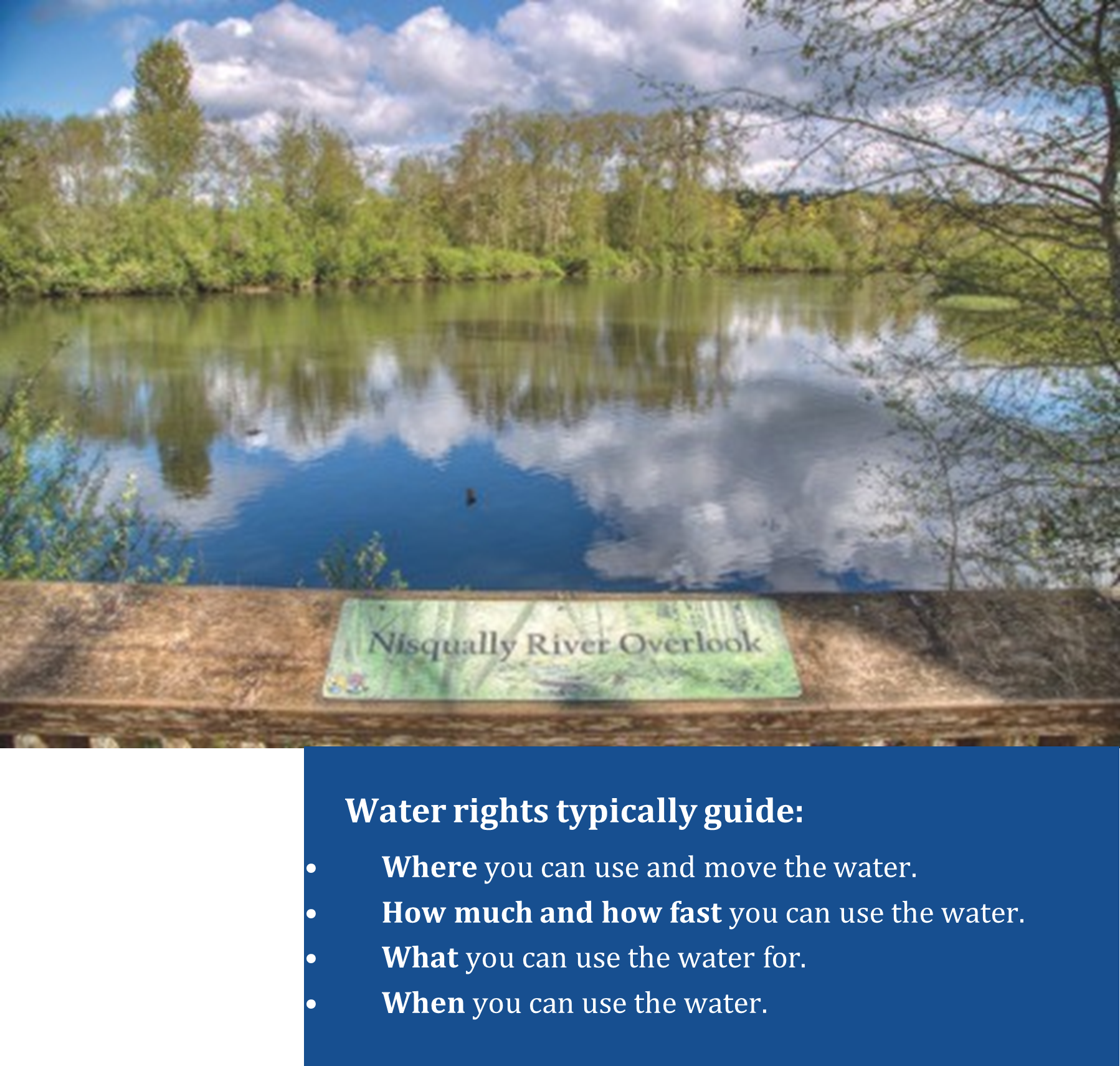
Water is a public resource, so even if you have water rights, you don’t own the water; you have the right to use it in the ways laid out in your water rights documents. If you did not get water rights documents with your property purchase paperwork, it is likely that the property did not come with water rights. Also, if you are not using the water rights as laid out in your documents, you could lose some or all of your water rights.
There are two types of water rights: Surface water rights are for rivers, streams, and lakes. Groundwater rights are for water pumped from a well.
A senior water rights holder is someone who started using the water for beneficial purposes first; they have the most established legal claim to water in a particular area.
A junior water rights holder has a later claim, and their access to water during shortages is restricted, with senior rights taking precedence. No more water rights are available in some locations because granting them would impair the most senior rights holders: fish, wildlife, rivers, and Tribes.
You need water rights if:
- You want to farm and irrigate your
- You plan to use any surface water for any
- You need to use more than an average of 3,000 gallons of groundwater per
Learn more about water rights with the Department of Ecology’s Landowner’s Guide to Washington Water Rights. This document has more detail on when water rights are important to you, how to navigate the complexities of water rights, and how to find out about water rights for your property.
Water supplies are dwindling worldwide, even here in the rainy Pacific Northwest. Using water responsibly and keeping clean water supplies is critical to our future. With stormwater being the top source of pollution to our water, it’s important to eliminate pollutants that can flow into our local water from rainwater runoff.