
A Journey in Danger
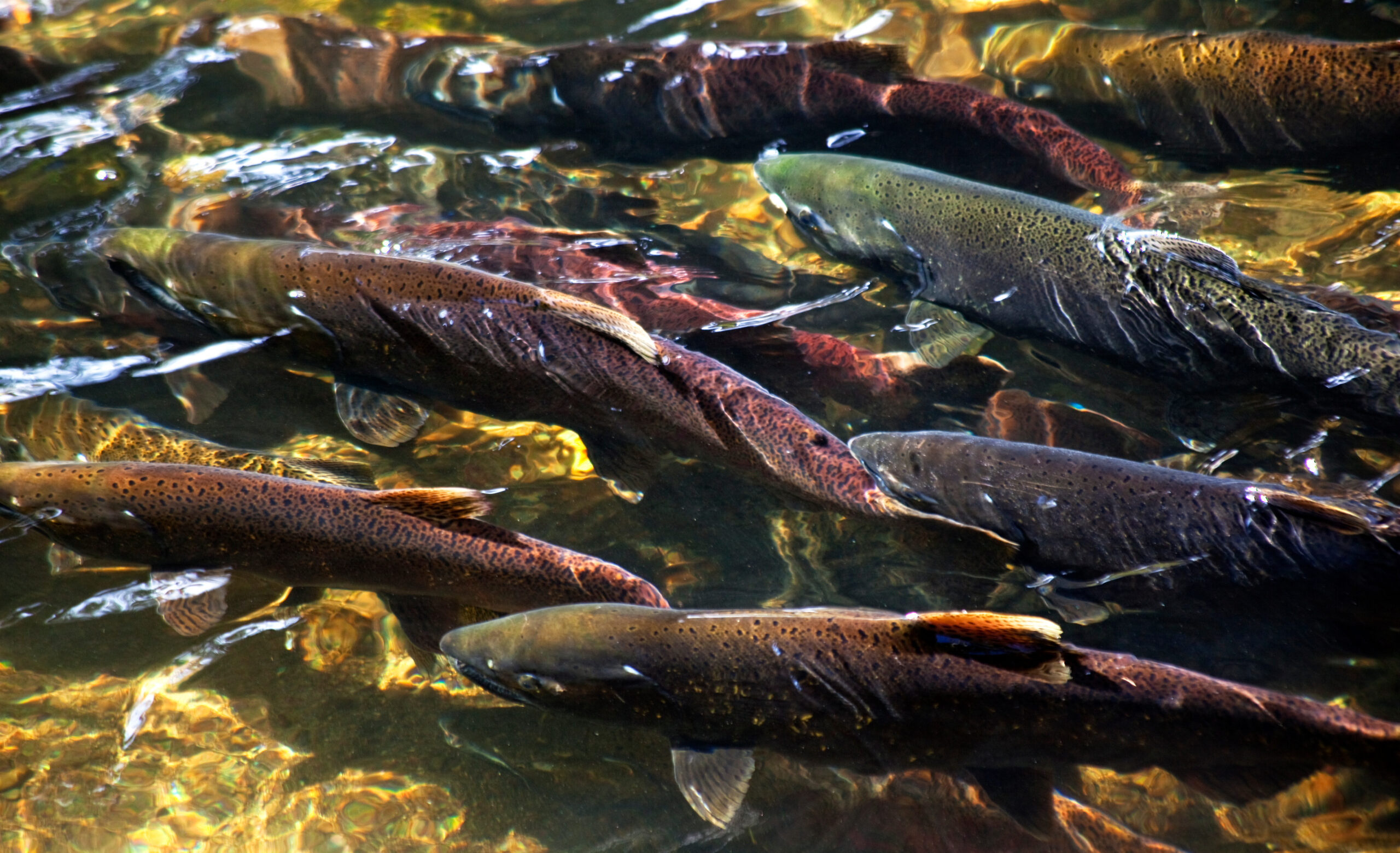
The annual return of coho salmon to their natal streams has been affected by a strange shift in salmon behavior immediately before spawning and immediately after being born. Before spawning, some coho swim in circles, lose balance, and gasp at the water’s surface. Within hours, they die. After eggs hatch, juvenile salmon respond less urgently to predators and are picked off more easily. For years, scientists didn’t know what these shifts in behavior had in common. Today, the answer points to something surprisingly ordinary: pollution from our roads.
How Driving Pollutes Waterways
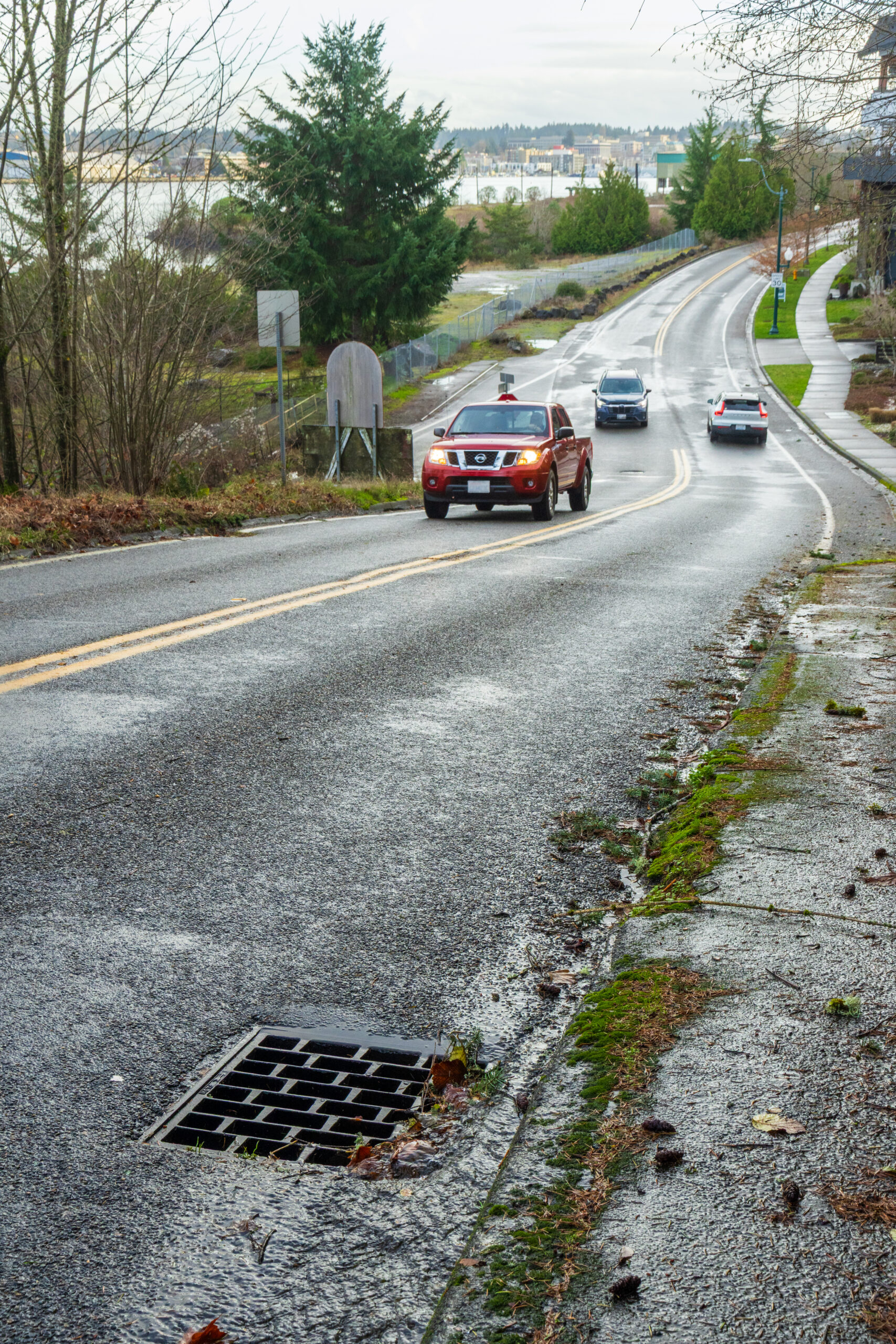
Every time a car moves, it sheds tiny particles. Tires wear down against pavement, and brake pads release fine metal dust. These materials build up on road surfaces.
When rain falls, stormwater washes these particles, including heavy metals and toxic chemicals, into nearby streams, rivers, and ultimately the Salish Sea. What begins as every day driving becomes a direct source of pollution in salmon habitats.
There are two particularly important pollutants to be aware of. One comes from tire particles and the other from breaks. Tires shed a chemical dust called 6PPD-q, which we cover in depth in “Tires and 6PPD-q” [add hyperlink]. Here we concern ourselves with what breaks have to do with the health of salmon, and what is being done about it.
Copper’s Hidden Impact
Every time a motorist hits their breaks, copper particles drop onto the road and can find their way into nearby streams. Unlike tire chemicals, copper doesn’t typically kill salmon immediately. Instead, it disrupts their sense of smell, an ability critical for survival. Salmon rely on smell to find food, detect predators, and navigate back to their home streams. Even tiny amounts of copper can interfere with this system. Studies show that juvenile salmon exposed to copper fail to respond to predators. Instead of hiding, they continue swimming, making them far more vulnerable to being eaten.
A Widespread Problem
This issue affects waterways across the Pacific Northwest. Each year, millions of cars release copper into the Salish Sea. Every time a driver slows down, small amounts of copper shed off their brake pads. Over time, these tiny contributions add up, especially in urban areas where stormwater flows directly into natural waterways. Because most stormwater flows directly into nearby waterways without any treatment, pollutants can quickly reach the streams where salmon live and spawn.
Progress and Solutions
Washington State passed the Better Brakes Law, which requires manufacturers to certify to the Department of Ecology that their brake pads contain trace amounts of copper or none at all. requiring manufacturers to phase out copper and other toxic materials in brake pads. Additionally, the Washington State Legislature directed the Department of Ecology to identify safer alternatives, helping reduce pollution at its source.
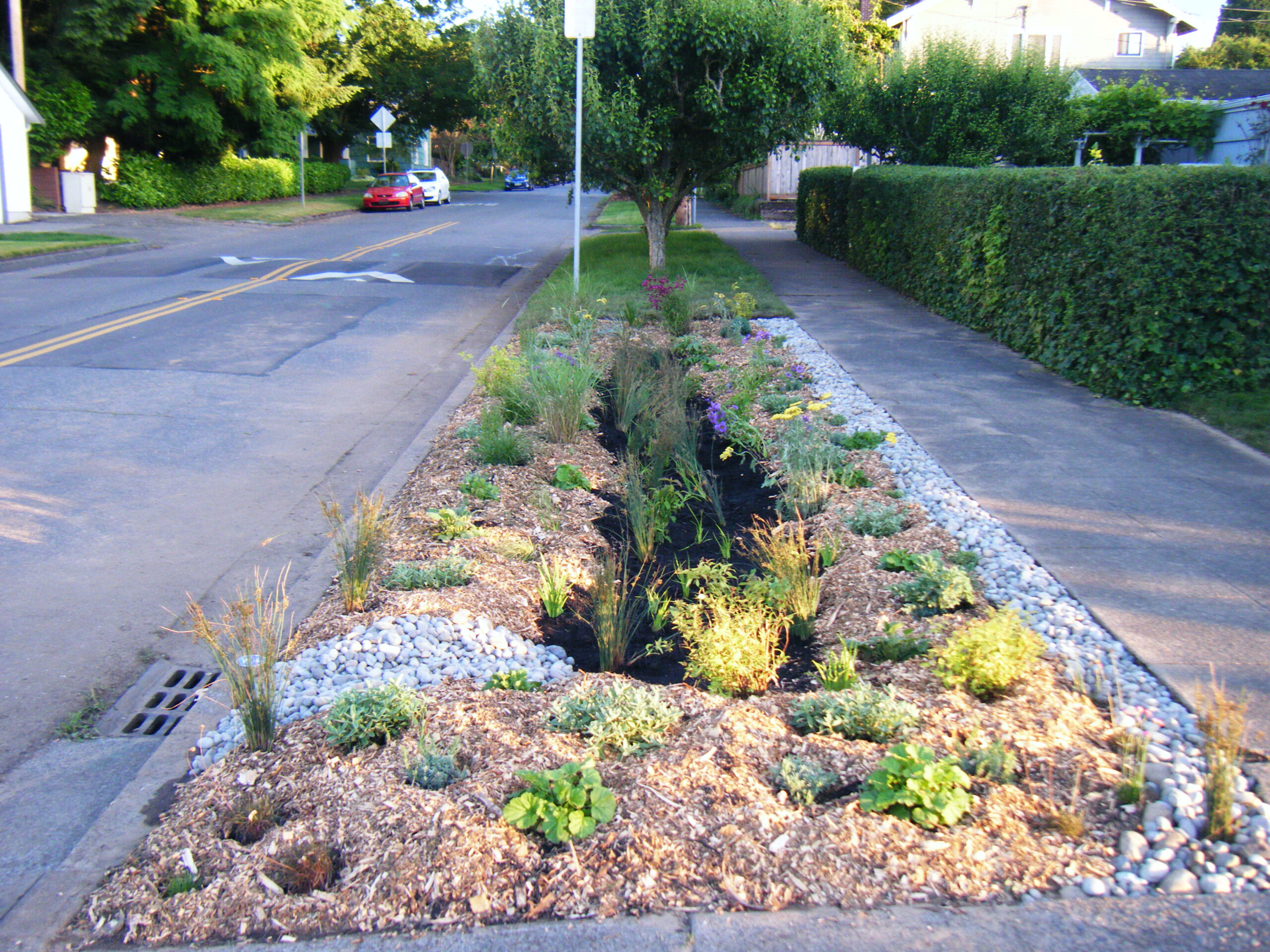
Other systemic changes to how we manage stormwater support the effort to protect salmon. Approaches to stormwater management including rain gardens, permeable pavement, and fungi inoculated bioswales help filter pollution before it reaches streams, rivers, and the Salish Sea.
Still, because runoff carries many different contaminants, solving the problem will require continued innovation and public awareness.
How You Can Help
You can help your community protect salmon by pushing for more structural changes like improved bike lanes and better bus service, and by taking direct action yourself:
- Drive less: walk, bike, carpool, or use public transit
- Combine trips to reduce the number of drives you take
- Buy products produced locally
- Ask for low-copper or copper-free brake pads next time you need a replacement
These small actions can reduce the amount of harmful pollution entering waterways.
A Shared Responsibility
Coho salmon are essential to the ecosystems of the Pacific Northwest. They support wildlife, forests, and local communities, and hold deep cultural importance for Indigenous peoples in the region. Protecting them means recognizing how daily habits connect to environmental health. By combining smart policies, better technology, and individual action, we can reduce pollution and help ensure that coho salmon continue their journey home for generations to come.