
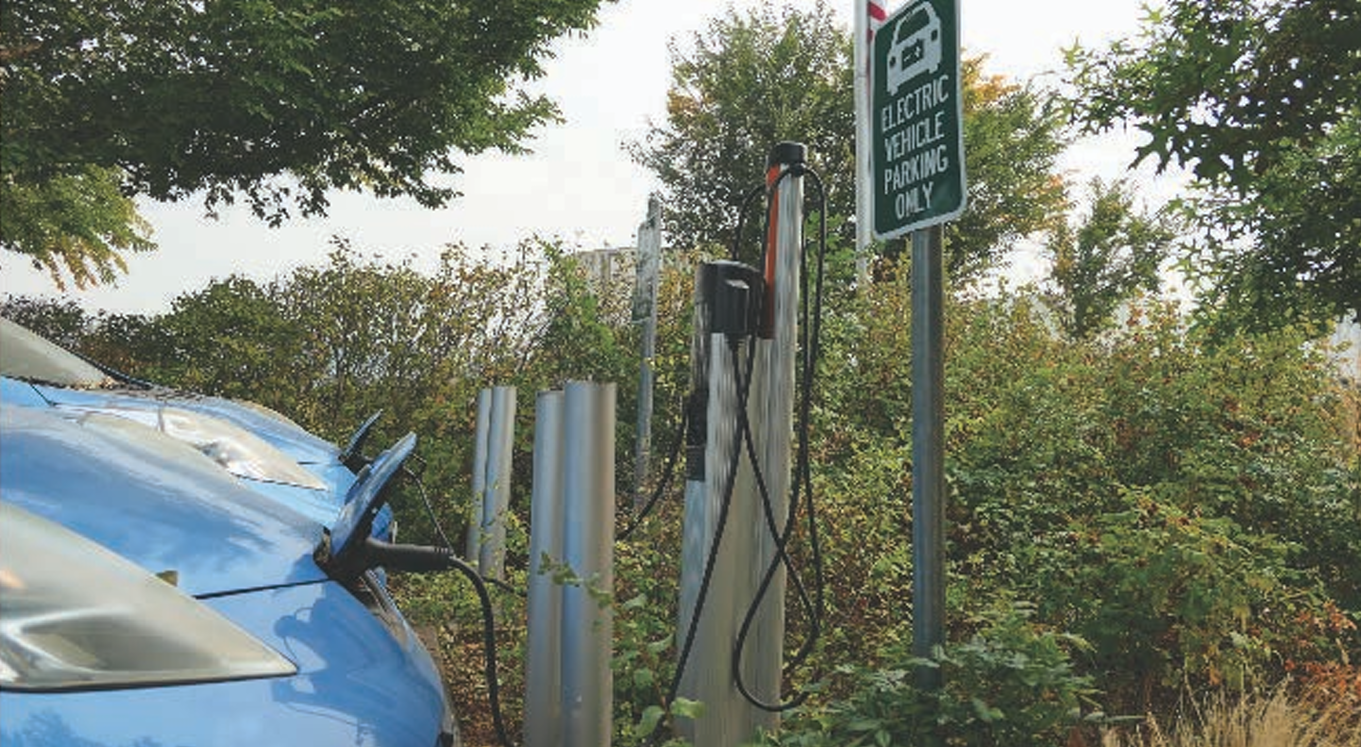
More people are switching to electric vehicles (EVs) these days! If you are looking to purchase a new or used vehicle, consider getting an EV. Driving an EV will not only lower your carbon footprint, it will also save you money and help protect our local waterways!
Healthier Waters
You might be asking yourself, “How can driving an EV help protect our local waterways?” Reducing vehicle leaks is a big priority for Puget Sound, and EVs don’t leak oil, gas and other fluids. EV engines are much simpler than gas powered ones because they don’t have to convert thermal energy into kinetic energy. As a result, they don’t require engine oil or gasoline (obviously). What you don’t have can’t leak!
Lower Emissions
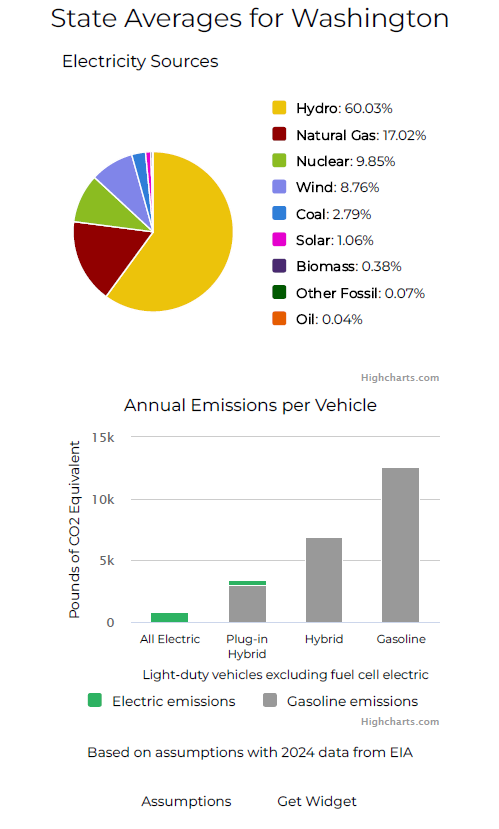
In the Pacific Northwest, most of our power comes from hydroelectric sources. That means that when you drive an EV you are trading fossil fuels (gasoline and diesel) for green energy sources. Look up your specific zip code’s electricity mix and EV emissions on the US Department of Energy’s Alternative Fuels Data Center.
Bye-Bye Gas Stations
Depending on your local gasoline and electric rates, EV operation can be 3 to 5 times cheaper than gasoline and diesel-powered cars. All electric vehicles do not require gasoline and can be charged at home with a standard 120V outlet, or a 240V outlet or charger can be installed for faster, more efficient charging.
EV Performance Benefits
Electric motors provide quiet, smooth operation, stronger acceleration and require less maintenance than gasoline-powered internal combustion engines.
EV Driving Range and Recharge Time
EV range on a full charge goes from around 80 to over 330 miles. The average American’s daily round-trip commute is less than 30 miles. Fully recharging the bigger battery packs with 240V can take 4 to 8 hours, so you can charge while you sleep. A “fast charge” to 80% capacity can take as little as 30 min. If you are interested in learning more about the benefits of EVs visit climatetoolbox.info.
State Averages Graphic Source: Alternative Fuels Data Center