
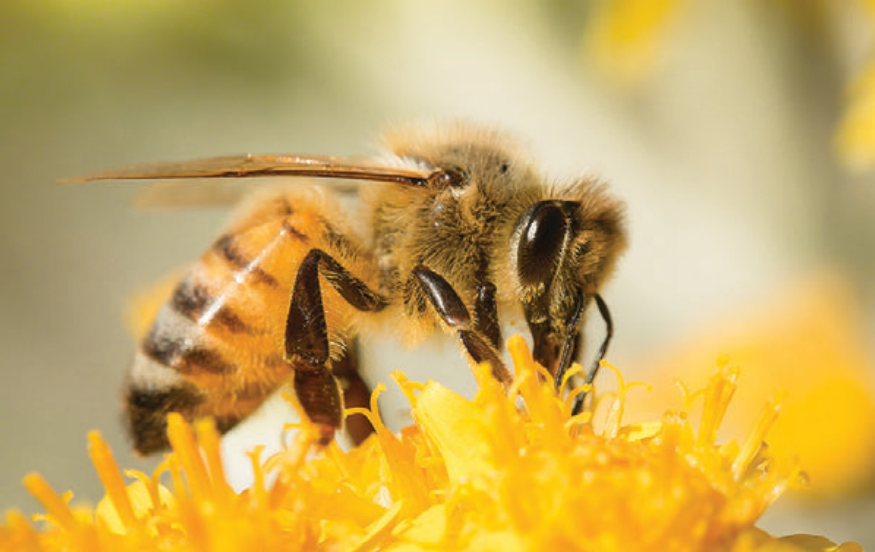
We’ve all heard the phrase “busy as a bee” and if you’ve ever watched a bee buzzing from flower to flower, gathering nectar, you can see where it comes from. Bees are one of our most important pollinators. According to worldatlas.com, bees pollinate approximately 16% of global flowering plants and around 400 agricultural crop plants.
Colony Collapse Disorder
By now, you’ve probably heard that bees are in trouble, both native wild bees and European honeybees. In 2006-2007 beekeepers noticed a phenomenon called “Colony Collapse Disorder” or CCD. CCD occurs when the majority of “worker bees” in a colony disappear and leave behind the queen, a few nurse bees and plenty of food. A hive cannot survive without worker bees and eventually dies. According to the US Environmental Protection Agency (US EPA), the number of hives that did not survive the winter months was as high at 60% in 2008. That number dropped to 31.1% in 2013. Though CCD rates are dropping, the US EPA and others are still concerned.
Why is CCD happening?
Many theories exist about the causes of CCD, but researchers are focusing on these factors:
- An invasive pest (varroa mite)
- New or emerging diseases
- Pesticide poisoning through exposure to pesticides applied to flowers, crops or for in-hive insect/mite control
- Stress on bees due to management practices, such as transporting to multiple locations across the country
- Changes to habitat where bees forage
- Not enough sources of nectar or poor nutrition
- Potential immune-suppressing stress on bees caused by one or more factors listed above
Protect Bees from Pesticides & Insecticides
Bees need plants that produce nectar and pollen. Unfortunately, bees can’t tell the difference between a plant growing in our yard or farm versus a weed. They also cannot tell if a plant has been treated with a pesticide or an insecticide. For example, neonicotinoids, a class of insecticides derived from nicotine and applied to nursery plants, is used to control aphids, weevils, and other insects. Studies have shown that continuous and long-term exposure to neonicotinoids can be highly toxic to bees, especially threatening the queen, resulting in lower reproduction rates. The impacts of using pesticides such as neonicotinoids are far reaching. As the chemical dissolves in water, it makes its way into our waterways from storm and agricultural runoff. Through water pollution, the insecticide can then be absorbed by surrounding plants and transferred through pollen, adversely affecting pollinators.
9 Ways to Reduce Weeds While Protecting Bees
- Cover bare ground with coarse mulch to prevent weeds from growing.
- Pull weeds in late winter/early spring before they go to seed.
- If you can’t pull all the weeds, then cut the flowers before they go to seed.
- Replace weeds with native or noninvasive pollinator-friendly plants that bloom from spring to fall.
- When buying ornamental plants to attract bees, avoid buying plants treated with neonicotinoids containing: Clothianidin, Dinotefuran, Imidacloprid, or Thiamethoxam
- Avoid purchasing prepackaged wildflower seed mixes as they contain many invasive weed type flowering plants.
- Avoid using pesticides, insecticides and fungicides.
- If you must use pesticides, follow any specific requirements to protect bees on the label and spray after the flower petals have fallen (when it’s less attractive to bees).
- Look out for Stream Team trainings and events. We offer tons of opportunities to learn about natural yard care and stream health!