
Washing your car might feel like a simple weekend task, but where and how you do it has a direct connection to the health of our local waterways and drinking water.
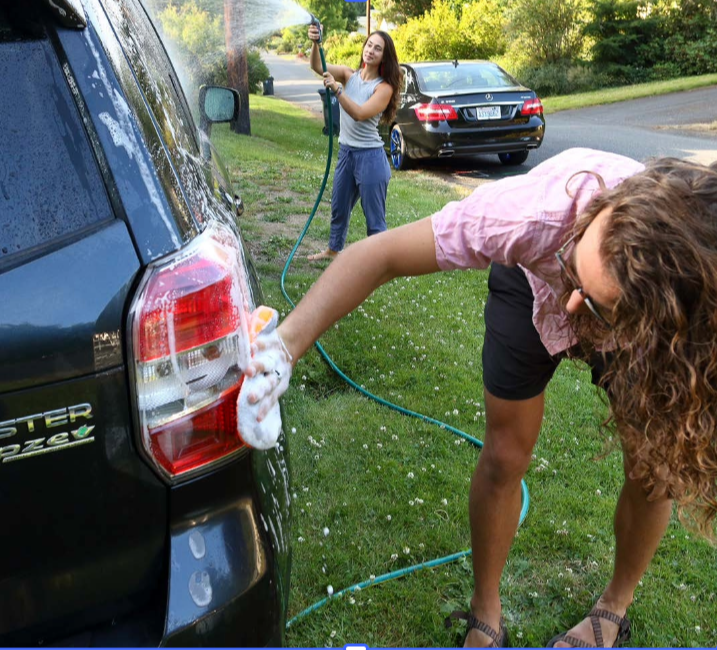
Dirty wash water often flows into storm drains and out to nearby streams and the Salish Sea without treatment. From there, it can affect water quality, fish, wildlife, and the places we all enjoy for swimming, fishing, and recreation. That means even something as routine as washing your car can either add to pollution or help protect the waters that sustain our communities.
What’s Really in that Wash Water?
Cars collect more than just dirt. Washing them can also rinse off pollutants and other harmful materials into local waterways where communities swim, play, and fish, including:
- Oil and fuel residues
- Brake dust and heavy metals (like copper and zinc)
- Tire particles and road grime
- Soaps and detergents
Even small amounts of these pollutants can hurt our local waters. Soap can be especially harmful. It breaks down the protective mucus (slime) layer on fish and reduces oxygen in the water. Over time, it can become harder for fish to stay healthy and survive.
Better Ways to Wash Your Car
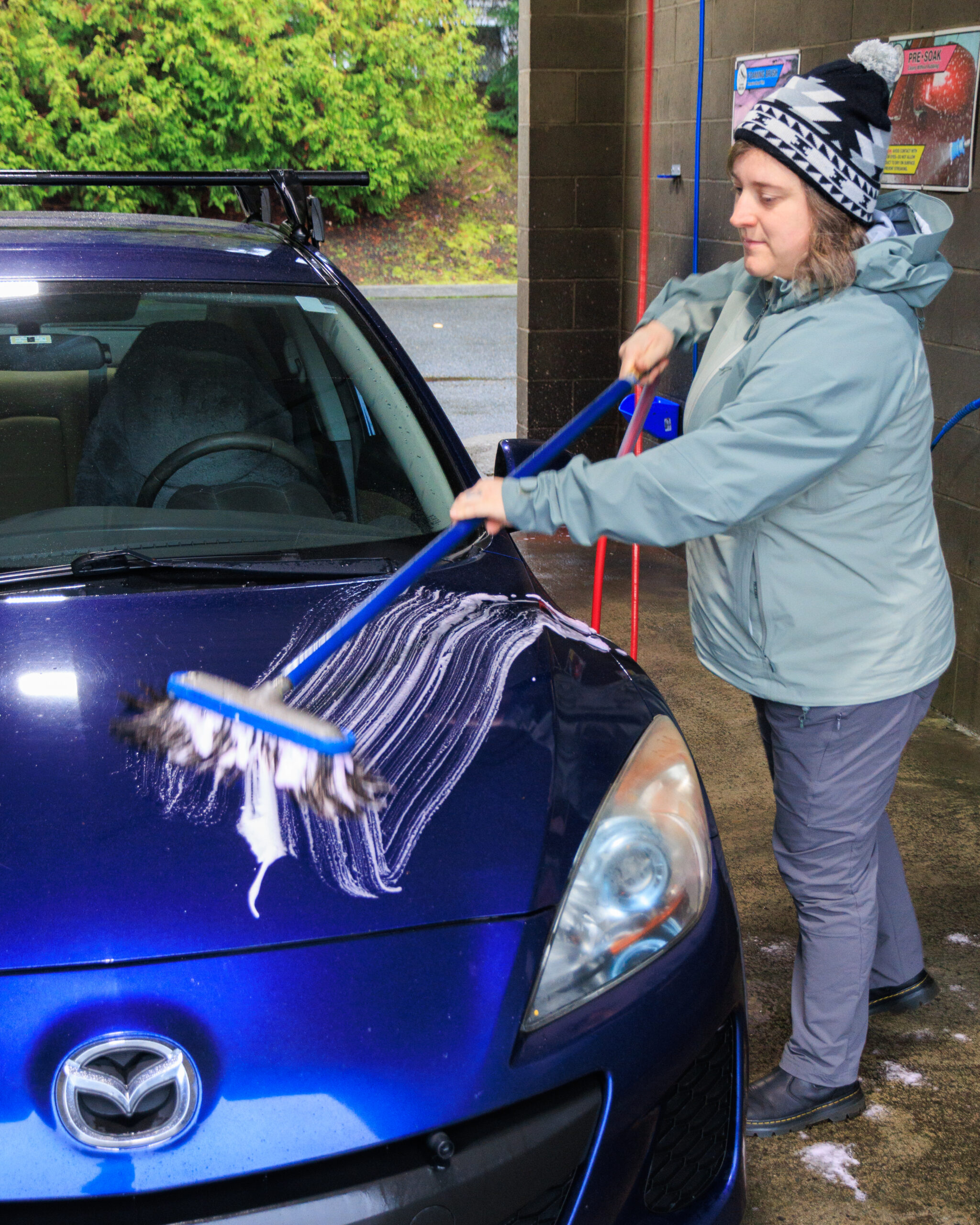
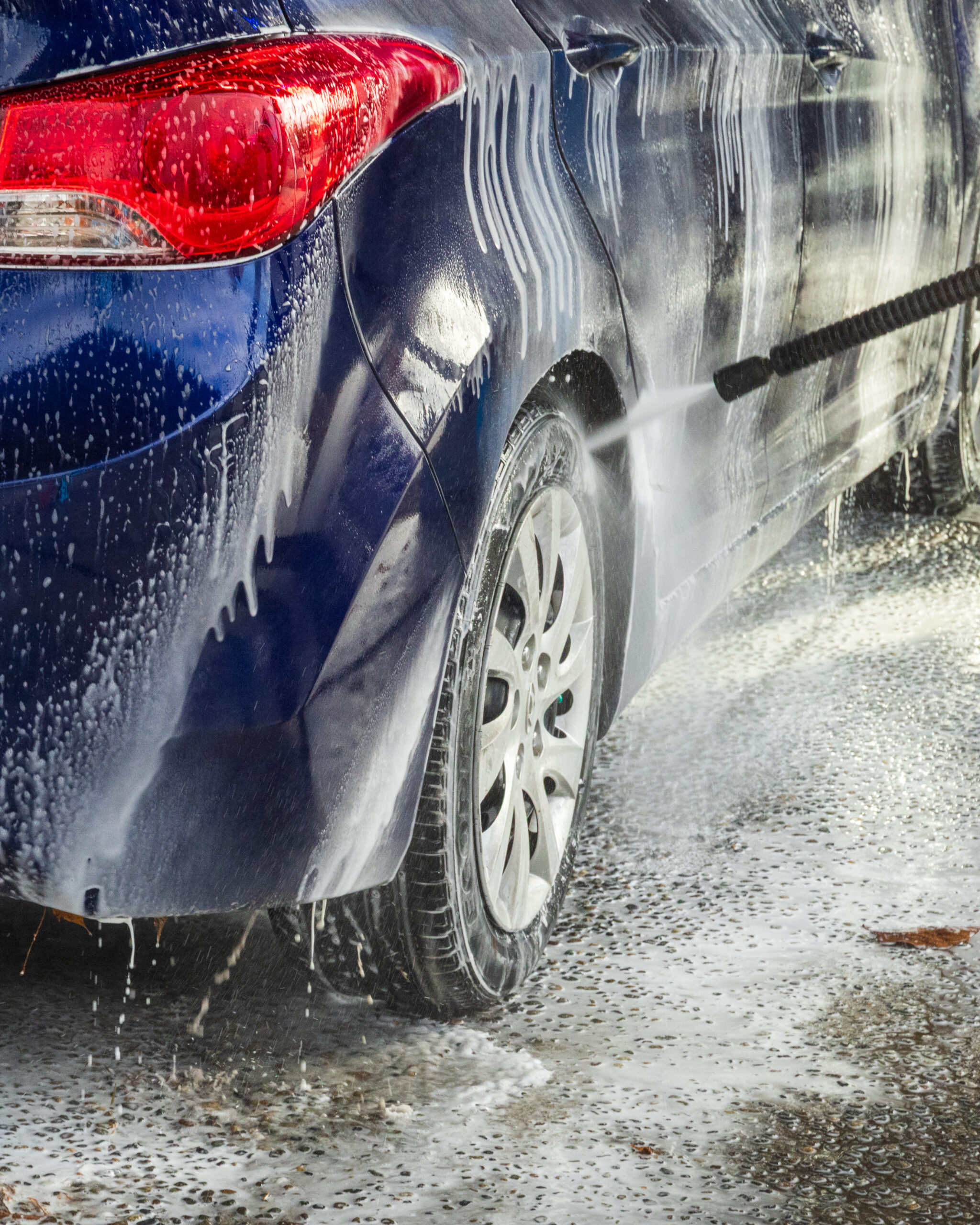
The good news is that protecting water quality does not require a lot of extra effort. A few thoughtful choices can go a long way!
Use a commercial car wash
This is the easiest and most effective option. Commercial car washes send their wastewater to the sanitary sewer system, where it is treated before being released to the Salish Sea. Many local car washes also recycle their wash water, helping save water overall.
Wash on grass or gravel
If you wash your car at home, choose a surface like grass or gravel instead of pavement. Soil and vegetation act as natural filters, helping trap and break down pollutants before they reach groundwater or nearby streams.
- Use a bucket and turn off the hose. Using a bucket instead of a constantly running hose saves water and reduces runoff into nearby roads. Turn the hose off between rinses to keep water use low and save money.
- Choose soap carefully and use less. If you use soap, pick one that is labeled biodegradable and phosphate-free and use it sparingly. In many cases, a simple rinse or spot-clean is enough.
- Keep wash water out of storm drains. Try to direct water away from streets and storm drains. Even a small amount of runoff carries pollutants directly into nearby waterways. 6PPD-q is an especially toxic chemical that can wash off of car tires. [HYPERLINK TO PART 3: 6PPD-Q]. Even a tiny amount can threaten entire salmon populations.
What about charity car washes?
Charity car washes are a great way to raise money for good causes, but they are often held in locations where wash water can flow into storm drains and reach our streams, lakes, and the Salish Sea.
When possible, consider using a professional, eco-friendly car wash fundraiser instead of a traditional parking lot. Local businesses like Shur-Kleen Car Wash, Evergreen Car Wash, and The Wave Car Wash offer programs where non-profits can sell tickets and keep a portion of the proceeds.
It Adds Up
Most water pollution does not come from one single large source. It builds up from many everyday actions. Washing your car the right way may seem small, but it can make a real difference when we all do our part.
The choices we make around car washing and maintenance play a role in the health of our waterways. Taking a little extra care reduces pollution at the source and supports the long-term health of fish, wildlife, and our communities
It may seem like a small change, but it makes a big difference!