
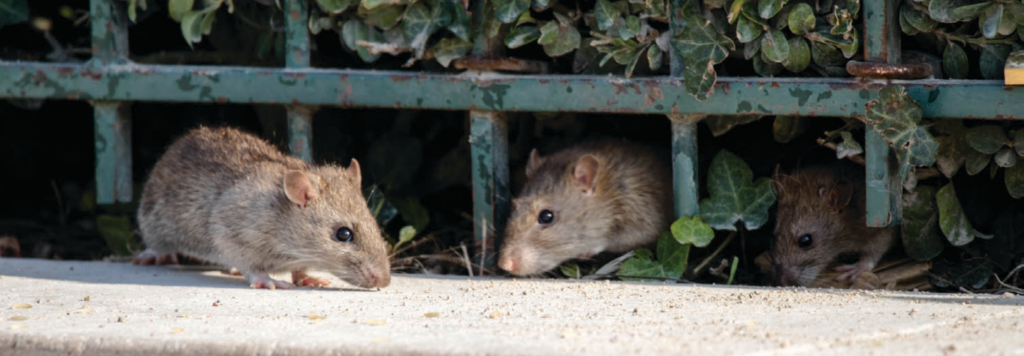
Rising numbers of Norway and black rats (aka roof rats) in the Pacific Northwest are posing serious problems for residents and businesses. Rats carry and spread disease, eat and contaminate food and destroy property. Experts estimate that there has been a 15 to 20 percent rise in global urban rat populations in the past decade. There are a few theories for this, but scientists are not certain. One possible explanation is the rise in average temperatures and milder winters which can result in additional reproduction cycles over time. Another is the increase in the total number of people living in cities around the world. In 2007, the portion of humans living in cities surpassed 50% for the first time in history.
So what can you do to manage or prevent a rat infestation? Successful control is not simple. Many of the methods, products and materials used to control rats and mice can be harmful. Anticoagulant rodenticides have been used for decades for rodent control worldwide. They are harmful to humans, dogs, cats, and wildlife and could pose an indirect threat to surface waters. Recent research findings show that second generation anticoagulant rodenticides also affect aquatic species.
Use the following tips to manage rats without using poisons:
Prevent Access to Food and Water
If you provide food for rats they will stay. Typical sources of food include birdseed, pet food, fruits and berries on the ground, bread crumbs, food waste, grease (e.g. such as an outdoor grill), and garbage.
- Prevent access to bird feeders. If a squirrel can reach the bird feeder, so can a rat.
- Keep garbage can lids closed tightly.
- Pick up fruits and vegetables in your yard.
- Feed dogs and cats inside and cleanup pet waste regularly.
- Fix leaky outdoor faucets, if possible, eliminate access to sources of water.
- Keep all stored food in rodent-proof containers.
- Use only rodent-resistant composters keeping lids tight.
TIP: Don’t rely on cats, they prefer to hunt mice and may have a detrimental impact on bird populations.
Prevent Access to Shelter
While outdoor food sources escalate rat problems, food is not the only draw for rodents. Yards with woodpiles, debris or old furniture lying around provide rats with nesting sites. Entry points to warm shelter both inside and outside the home add to the problem.
- Rat proof buildings. Look for gaps or holes inside and outside your home-mice can squeeze through a nickel sized hole, rats a half-dollar sized hole!
- Seal openings or gaps around doors and windows, kitchen cabinets, behind stoves and sinks, drainpipes, vents, power lines and cables, and cracks in siding or foundations. Use stainless steel mesh and caulk, lath screen, sheet metal, cement or hardware cloth to plug holes.
- Prevent rats from climbing buildings. Keep bushes, vines, and tree branches cut back at least 3 feet from your house. Place metal or thick plastic barriers over pipes.
- Move your woodpile at least twice a year and keep it elevated above the ground.
- Mow your lawn regularly.
- Keep yards and alleys clean-take junk to the dump!