
Here at Stream Team, we love our plants. However, some plants spread quickly and harm our local environment and wildlife. These are called noxious weeds. They are non-native, invasive plants that threaten public health, ecosystem health, wildlife, agriculture, and recreational areas. These plants can reduce biodiversity, crowd out native species, and damage wildlife habitat. Some can be toxic, increase wildfire risk, or create maintenance challenges for farms, roads, and public spaces.
Because of these impacts, many jurisdictions—including Thurston County—offer free help to community members who want to remove noxious weeds. What surprises many people is that local nurseries still sell some of these plants. They grow easily here, but that same ability to thrive can allow them to spread beyond gardens and cause long-term harm.
Help control noxious weeds by following these steps:
- Never purchase a noxious weed for your garden
- Learn to identify and control noxious weeds on your land
- Report infestations when you find them
- Grow native and non-invasive plants
- Clean vehicles, boats, boots, and equipment before entering new water bodies
- Talk to your friends and neighbors about the impact of noxious weeds
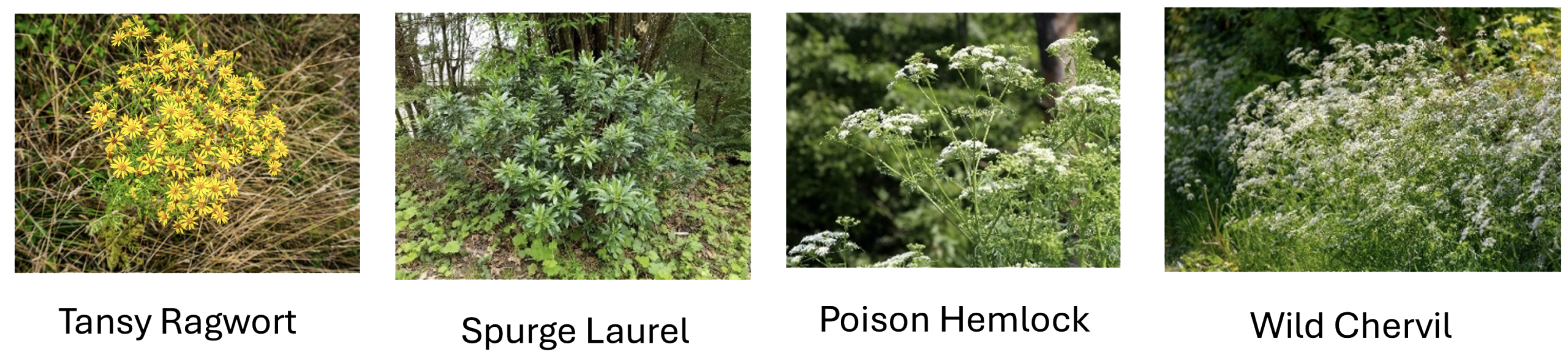
Free Disposal of Tansy Ragwort, Poison Hemlock, Spurge Laurel, and Wild Chervil at:
Waste and Recovery Center (WARC)
Address: 2420 Hogum Bay Road NE, Lacey, WA 98516
Hours: Monday-Friday: 7 a.m.–4:45 p.m., Saturday & Sunday: 8 a.m.–4:45 p.m.
Rainier Drop-Box
Address: 13010 Rainier Acres Road SE, Rainier, WA 98576
Hours: Friday, Saturday, Sunday: 9 a.m.–5 p.m.
Rochester Drop-Box
Address: 16500 Sargent Road SW, Rochester, WA 98579
Hours: Tuesday, Saturday, Sunday: 9 a.m.–5 p.m.
Common Noxious Weeds in Thurston County
Free Disposal
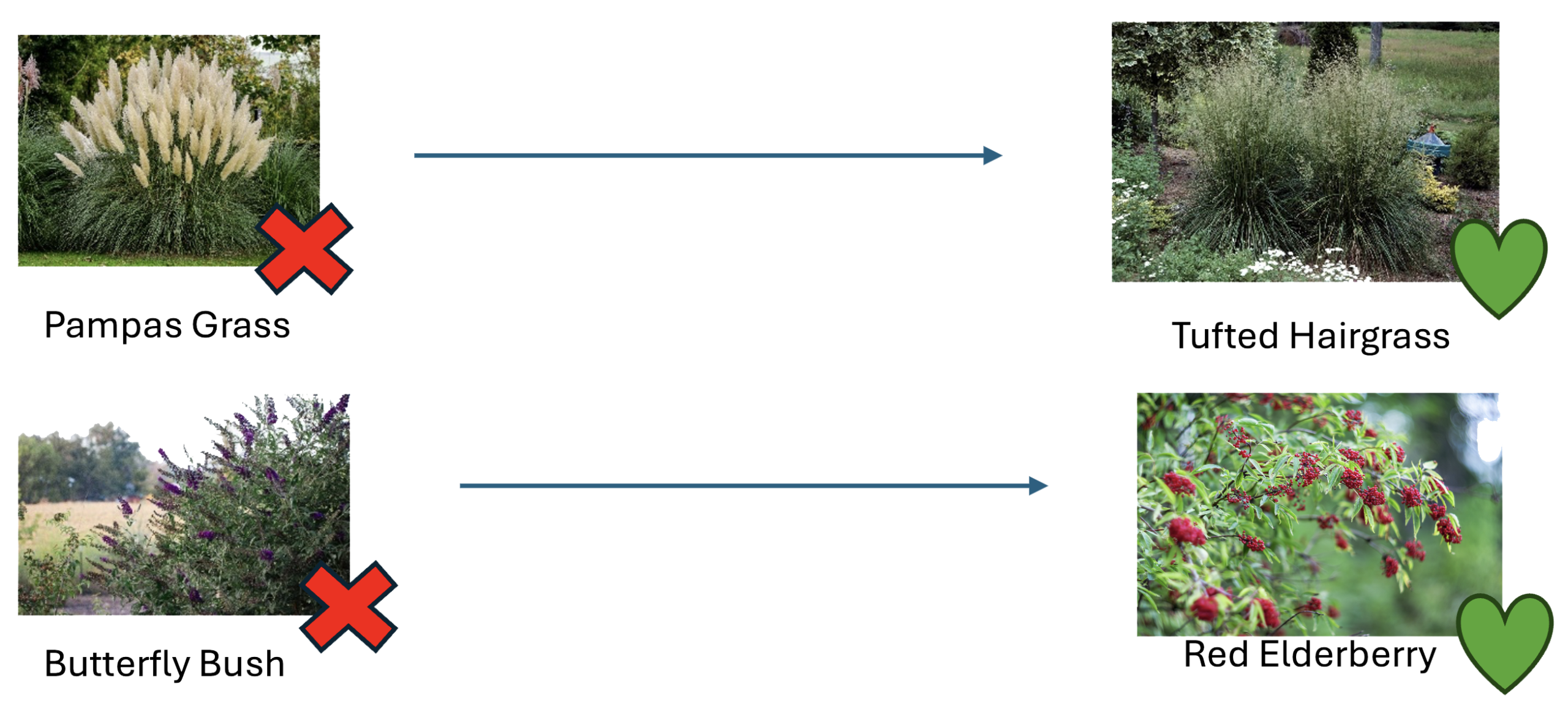
Noxious Weeds Not Included in the Free Disposal Program

Alternatives for Common Noxious Weeds
Visit Thurston County’s Noxious Weeds website for a pull list of plants, resources for controlling noxious weeds, and to report a noxious weed concern.