
Alternatives to traditional pavement can help reduce stormwater runoff by letting rainwater soak into the ground right where it lands. Pervious pavement is a type of pavement that allows water to soak into the ground instead of becoming stormwater runoff. This process is called “infiltration,” and pervious pavement does it by allowing water to flow into layers of gravel placed below the paving surface, then into soil below that, and finally the groundwater below. By infiltrating most of the storm water on-site, the amount of water and pollution flowing into storm drains and impacting rivers and streams is greatly reduced. This, protects water quality, prevents streambeds from drying up in the summer, reduces flooding, and reduces stream bank erosion. With more infiltration, groundwater is recharged and streams are replenished with cool, clean groundwater.
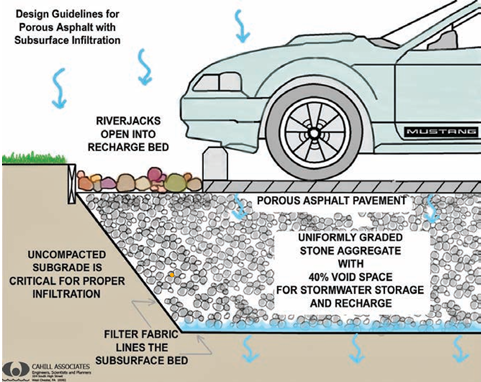
Permeable pavements must be installed and maintained differently than conventional pavements. The surface directly beneath permeable pavement must be engineered with uncompacted materials, so that water can flow freely and not back up. A critical component of successfully maintaining permeable pavements is regular removal of sediment, debris, and excessive moss from the pavement surface to prevent the surface from clogging. This maintenance looks like vacuuming with a specialized tool or sweeping regularly.
What Are the Options?
Porous Asphalt
A flexible solid surface like standard asphalt that uses a binder to hold material together. The finest materials (sand and finer) are reduced or eliminated in porous asphalt, resulting in the formation of pore space between the larger pieces of material in the solid surface that allows water to infiltrate to the underlying rock and soil.
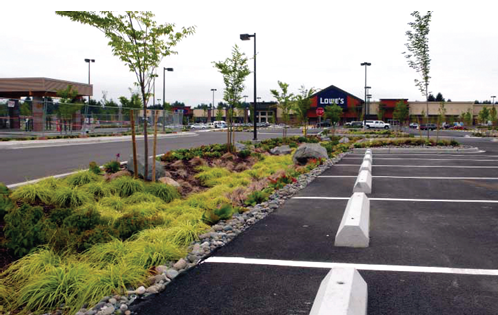
Pervious concrete
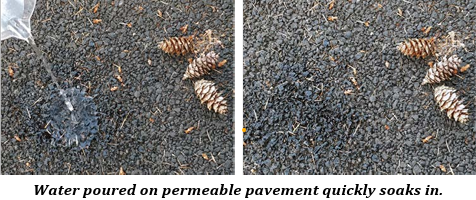
The surface pictured below is made of pervious concrete. It is a rigid, solid surface like conventional concrete that uses a cement-like material to hold material together. Fine material components (like sand) are reduced or eliminated in pervious concrete, resulting in the formation of small spaces between the larger material that allows water to infiltrate to the underlying rock base.
Permeable interlocking concrete pavement (PICP)
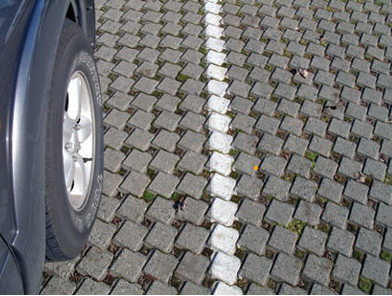
PICP consists of manufactured concrete pavers, with small openings between permeable joints. These are installed on a rock and sand base. Joints are filled with sand, gravel, topsoil, and/or vegetation. The vegetation can include a variety of non-turf grasses or low-growing groundcovers. Permeable pavers are made of naturally occurring porous rock, concrete, or asphalt.
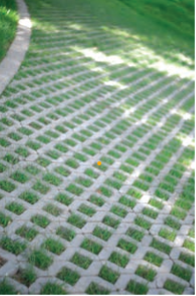
Open-celled paving grid with gravel or grass
Concrete or plastic grids that are filled with gravel and sand or planted with a variety of non-turf grasses or low-growing groundcovers. The system is installed on a rock and sand base.
Benefits beyond stormwater
Beyond the clear win for infiltrating water where it falls, permeable pavements provide many additional benefits in urban areas.
Porous asphalt and pervious concrete have rougher surfaces than their non-permeable counterparts, which provides better traction to vehicles and pedestrians. Cities that experience freezing weather in the winter have even found that permeable pavement materials require less salting for ice.
Other benefits of these materials include amending them with photocatalytic compounds to help remove air pollutants, like car exhaust. A similar hidden benefit, permeable pavement alternatives tend to be lighter in color, which can also help increase reflectivity of sunlight (albedo), reducing heat island effects in highly developed areas.
As local municipalities work to update development guidelines and standards, permeable pavement seems like an obvious choice for new development.