
What Is It?
Sheet mulching is a permaculture method that uses cardboard and organic materials to eliminate weeds or sod while building healthy soil. It is an easy, low-input method that requires little digging.
Why Sheet Mulch?
- Save time and money you would typically spend mowing and buying fertilizers.
- Replacing lawns with native plants supports wildlife and reduces water use.
- Decrease stormwater runoff of lawn fertilizers and pesticides.
When to Sheet Mulch?
Fall is the perfect time to sheet mulch so the material can break down over the winter and be ready for spring planting. However, you can sheet mulch at any time.
How to Sheet Mulch?
1. Mow grass or weeds down to the nub. Dig out and remove persistent weeds like blackberry.
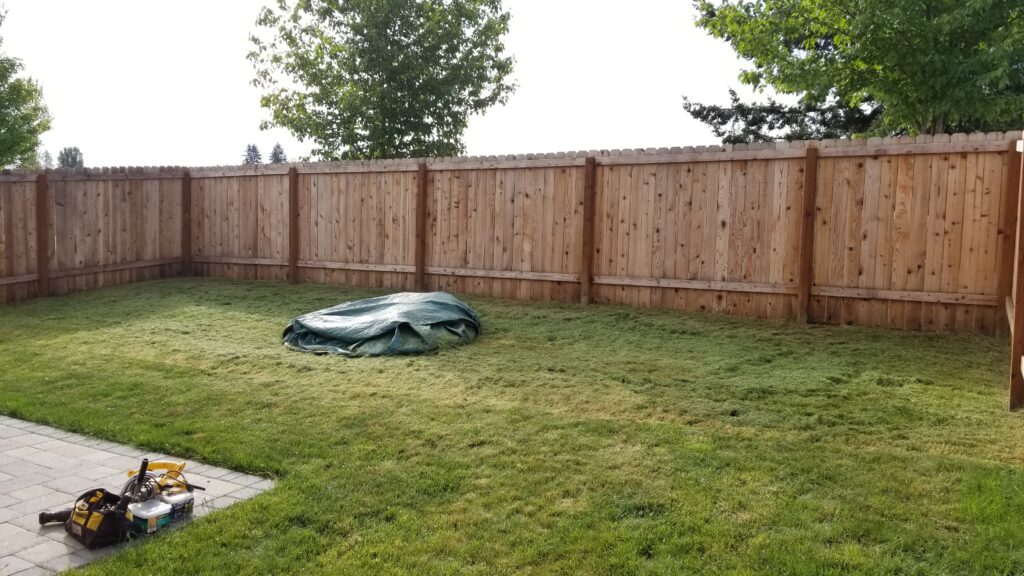
2. Dig a small trench (approximately 4” wide and deep) around the perimeter of the area.
3. Cover the ground with cardboard, making sure to overlap the edges by at least six inches. If you are sheet mulching in the dry season, generously wet the cardboard.
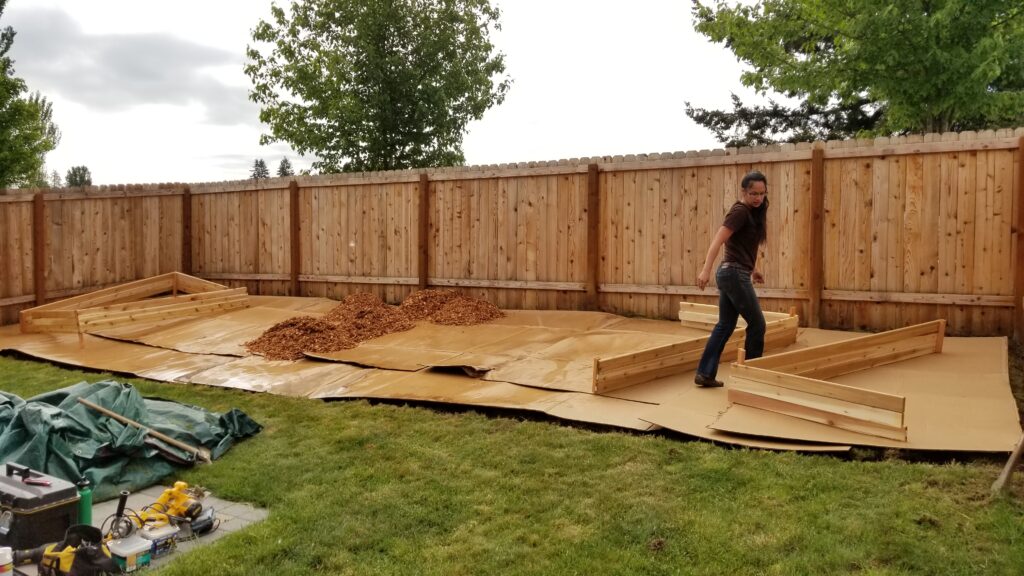
4. Apply two to four inches of high-quality compost.
5. Cover with four to six inches of woody mulch, straw, or arborist’s chips.
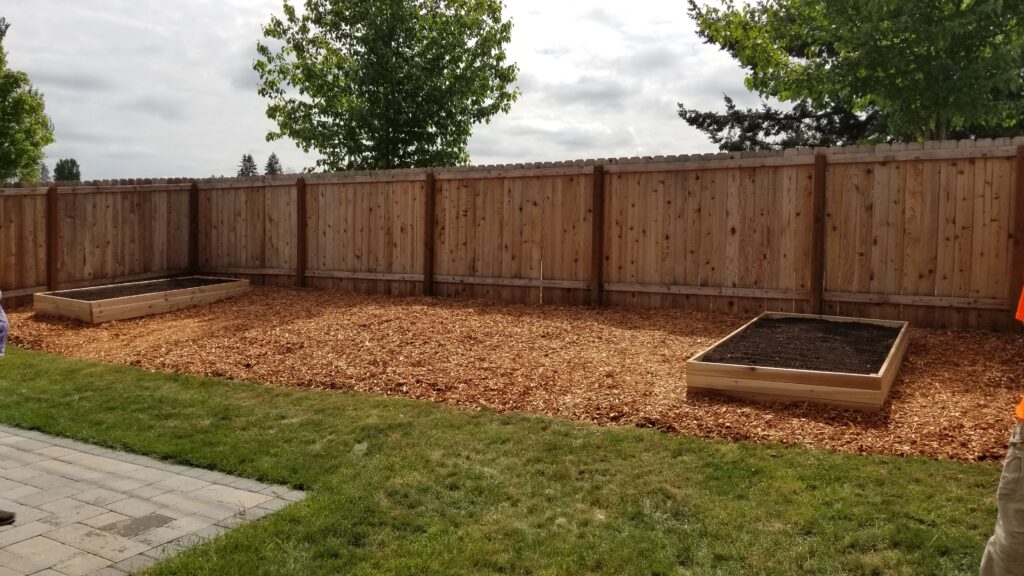
6. If you are planting at the same time, rake aside the mulch, cut a hole in the cardboard, plant, backfill with native soil, and replace the mulch.
7. For long-term maintenance, replenish the mulch layer to suppress weeds and prevent erosion.
Pro Tips
- If working in the summer, moisten the ground well before sheet mulching.
- Perform a soil test and amend the soil before covering it with cardboard.
- If your soil is clay or compacted, poke some holes in the ground before covering.
- Add a high-nitrogen material like chicken manure before cardboard to attract worms and other beneficial microorganisms.
- Install edging to keep grass out and wood chips in.
- Sign up for Chip Drop for free wood chips at GetChipDrop.com