
Vehicle Fluids in our Waterways
A drip here, a little trickle there… it all can add up to big trouble for our local waterways when those drips and leaks are automotive fluids. When power steering, transmission fluids, brake fluids, motor oil, and gasoline leak onto roadways or parking lots, rain washes them into storm drains, which can flow untreated directly to the nearest water body.
The chemicals contained in automotive fluids have a hazardous effect on wildlife and can pose a threat to our drinking water supplies by contaminating groundwater. Oil and other greasy fluids can coat the feathers of birds and harm the gills of fish. According to the U.S. Environmental Protection Agency, one gallon of oil can contaminate one million gallons of water.
Most radiator coolant ingredients, ethylene or propylene, will eventually break down in water into less harmful substances. However, puddles of coolant, especially those that are ethylene-based, pose a poisoning risk to both animals and humans, especially dogs, cats, birds, and children. Coolant that is allowed to reach our waterways contributes to higher biological oxygen demand (BOD) levels. When everything needs more oxygen, there is less to go around, and the resulting scarcity is deadly for plants and animals.
In addition to the health impacts of vehicle fluids leaks into our waters, there is a public financial impact as well. According to the Washington State Department of Transportation, it costs $319,000 per mile per lane to implement stormwater runoff Best Management Practices to mitigate harmful substances carried by stormwater along our state’s highways.
It Takes Just Three Small Actions
Together, we can keep pollution out of our creeks, lakes, rivers and the Salish Sea. Our own actions add up to a BIG difference for the Salish Sea and marine life!
Here’s how you can help:
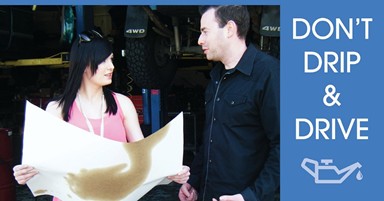
- Check your vehicle for leaks regularly and get them fixed promptly. Learn how to diagnose or fix a leak by visiting fixcarleaks.org.
- Always dispose of used motor oil properly by bringing it to your local auto shop for recycling. Call 1-800-RECYCLE or visit 1800recycle.wa.gov to find a location near you.
- Use ground cloths or drip pans if you find a leak or are doing engine work. Clean up spills immediately using an absorbent such as kitty litter then sweep it up and place it in a trash bag.
Preventing Leaks
To determine if your vehicle is leaking fluids, give it ‘the cardboard test’. Place a large piece of cardboard under your vehicle and leave it overnight. Check the next day to see if there are any leaks. The location and color of the leak can help you determine what it is.
| Fluid Color on White or Cardboard Paper | Possible Source |
|---|---|
| Light to dark brown | Oil. Light brown if changed often; dark brown if changed infrequently. |
| Light brown | Lube oil coming from center of rear axle or manual transmission. Has a rotten egg smell. |
| Light yellow to dark brown | Brake fluid. Becomes darker as it gets older and absorbs water. |
| Amber | Gasoline. Has a gas odor. |
| Clear | Power steering fluid or water. |
| Green | Radiator coolant. |
| Red | Radiator coolant, automatic transmission or power steering fluid. |
| Blue | Windshield washer fluid. |
| Orange, Pink, or Yellow | Winter windshield washer fluid. |
If you find that your vehicle is leaking fluid, the fix may be easier and cheaper than you think! Often, it is just a matter of a small part, such as an oil plug, that needs replaced or simply screwed on tighter or with threads aligned properly.
If the repair is within your budget, getting it fixed immediately will prolong the life of your vehicle and protect our waterways. If you are unable to repair the leak right away, place cardboard, drip pans, or newspaper under your car while it is parked until you can get it fixed. You can also sprinkle absorbents like sand or kitty litter on spills and then sweep them into the trash once they’ve soaked up the spill.
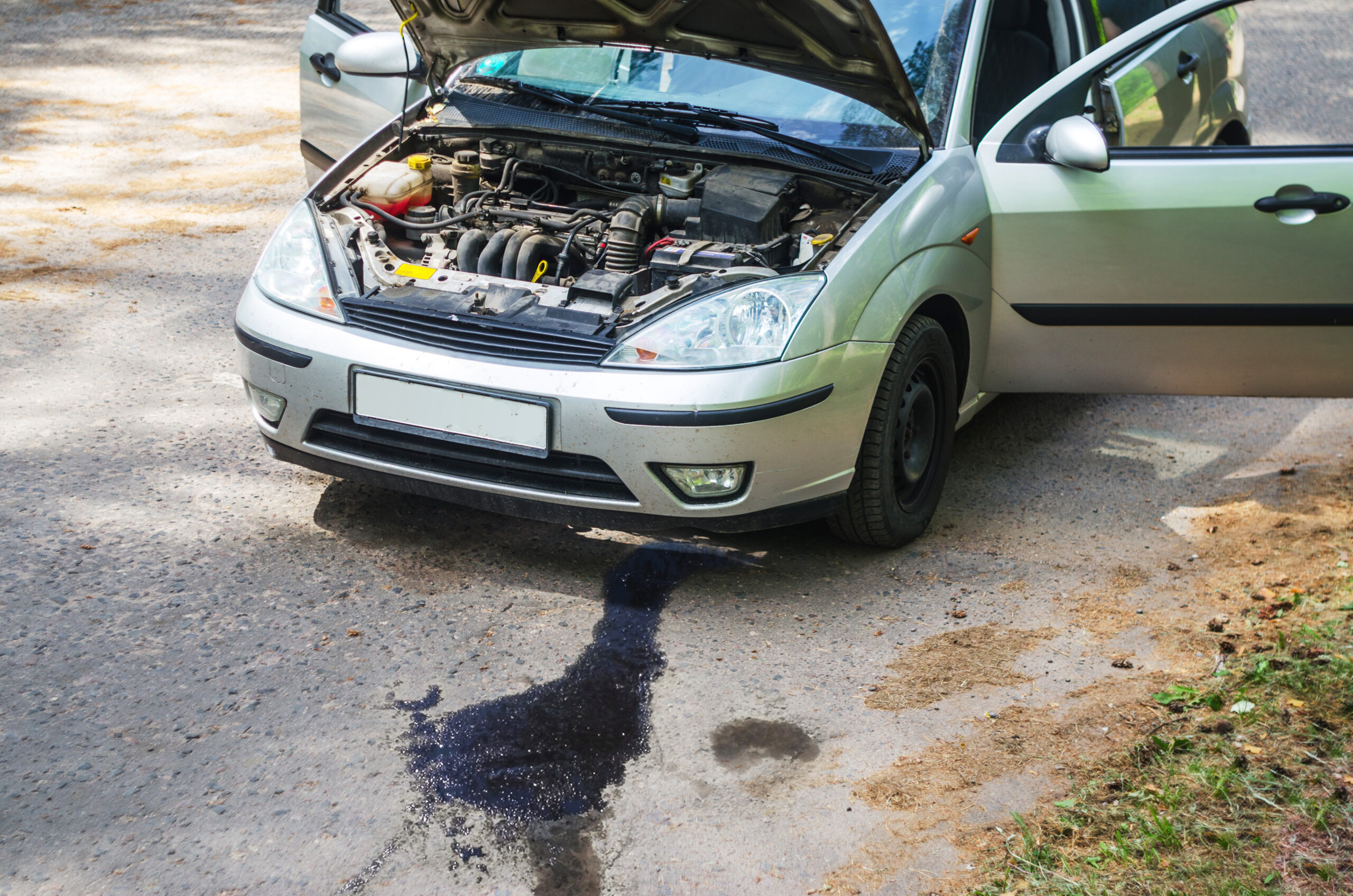
Used vehicle fluids should be placed in clearly labeled containers with tight-fitting lids and taken to the Thurston County Hazo House. Used motor oil maybe recycled at a number of locations. For details, and to find a nearby recycling location, visit the Ecology webpage Household Hazardous Waste.