
From time to time, maintenance crews are called out in an emergency to unclog sewer lines. Clogged sewer lines can lead to backups and spills, potentially endangering human health and our environment. Spills that reach our local waterways can be serious threats to human health and aquatic wildlife. Emergency maintenance and spill cleanup add extra expense to the regular maintenance budget.
In December of 2012, clogged pipes led to a spill near the Deschutes River. Maintenance crews discovered wads of rags in the pipes which had caused the incident. Crews were able to clean up this spill without a great risk to human or aquatic health.
If it didn’t come out of your body, or it isn’t toilet paper, it does not belong in the toilet.
The risk of clogged pipes leading to a spill can be reduced if we all remember not to treat the toilet as a trash can. If it didn’t come out of your body, or it isn’t toilet paper, it does not belong in the toilet. Most products with packaging claiming the product to be “flushable”, such as baby and personal hygiene wipes, are not flushable because they do not break down in the sewer system and can clog home and municipal sewer pipes.
Wipes, paper towels and rags tend to collect upon each other in sewer pipes. Items with “strings”, such as dental floss, tampons and hair, attract additional material to their “tails” and get wound around the pumps at the lift stations. This can disable the pump and back up the whole system.
In addition to the toilet, people often send items down the kitchen drain which can lead to clogged sewer pipes. The prime culprit is fats, oils and greases (FOGs) from cooking. When FOGs are allowed to go down the drain, they coagulate in sewer pipes. Even if you run hot water and soap down the drain, the FOGs will harden in the pipes as soon as they cool down.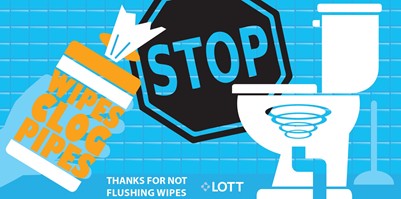
After cooking, scrape FOGs into a can. Cover the can and store in the freezer to cut down on kitchen odors. When the can is full, throw it in the trash. Free FOG kits, consisting of a scraper, reusable can lid and educational information, are available from LOTT Clean Water Alliance at 360-664-2333 or www.lottcleanwater.org.
Please think before you flush or wash anything down any drain or toilet!
Do not flush products labeled “flushable” such as baby and personal hygiene wipes. They do not break down in the sewer system and can cause backups.